
The following op-ed was submitted by third-year Brooklyn Law School student Alex Kambanis in response to what he called “blatantly xenophobic” comments from other Pappas Post readers on previously published articles. Kambanis earned a master’s degree in international studies from Durham University in England and wrote a thesis focusing on the nexus between immigration policy and contemporary forms of slavery. The views expressed do not necessarily belong to The Pappas Post.
I recently found a letter my grandfather, George, wrote to the United States Commissioner of Immigration in 1924:
“My father was taken a prisoner of war as well as one of my brother [sic], and both of them died in prison, leaving me as the sole supporter of my mother and two sisters…During the war, I served in the army, receiving a [sic] honorable discharge…My mother is too old to work and support the sisters, and they are too young to support themselves…If they were left there, they would have no one with whom they could stay, and would be left to the mercy of strangers and the danger of falling into the hands of those who are preying upon the minds of young refugees left stranded in countries foreign to their nature.”
George Kambanis, August 7, 1924, Petition for Refugee Status
George received a response, albeit six months later. Immigration policy took a markedly restrictive turn in 1924 for Greeks and other southern Europeans. Unfortunately, he came from the 1920s version of a “shit-hole country.” A few years after World War I, the country George had served turned a deaf ear to the pleas on behalf of his family.

The industrial revolution created a demand for unskilled labor. Between 1900 and 1910, a staggering 8.8 million immigrants came to the United States, the overwhelming majority from eastern and southern Europe. My grandfather was one of 46,283 Greek migrants who entered the U.S. in 1907. Despite filling low-paying, dangerous jobs citizens refused to take, many “real Americans” feared that unless measures were quickly taken to curtail the influx of southern and eastern Europeans, “their” nation would soon be unrecognizable. Many of these “real Americans” themselves were only a generation or two removed from Europe, and their arrival had similarly generated fear, sometimes violence, and calls for tighter borders.
Anxiety steadily grew as WWI, the global influenza pandemic and the 1920-21 economic recession stoked fears among the “real Americans” about the imminent threat posed by uncivilized invaders. In 1924, Congress responded with the National Origin Quota Act, whereby immigration quotas were set at 2% the number of foreign-born persons of any nationality in the United States in 1890. Indeed, use of the 1890 Census as opposed to the most recent 1910 one was deliberate, as it guaranteed that the majority of visas (nearly 85%) went to Brits, Germans, Scandinavians and the Irish. Use of the 1890 Census had a pronounced effect on Greek immigration. Whereas 3,000 Greeks annually would have received visas under the 1910 Census, a mere 100 Greeks were to be admitted annually.
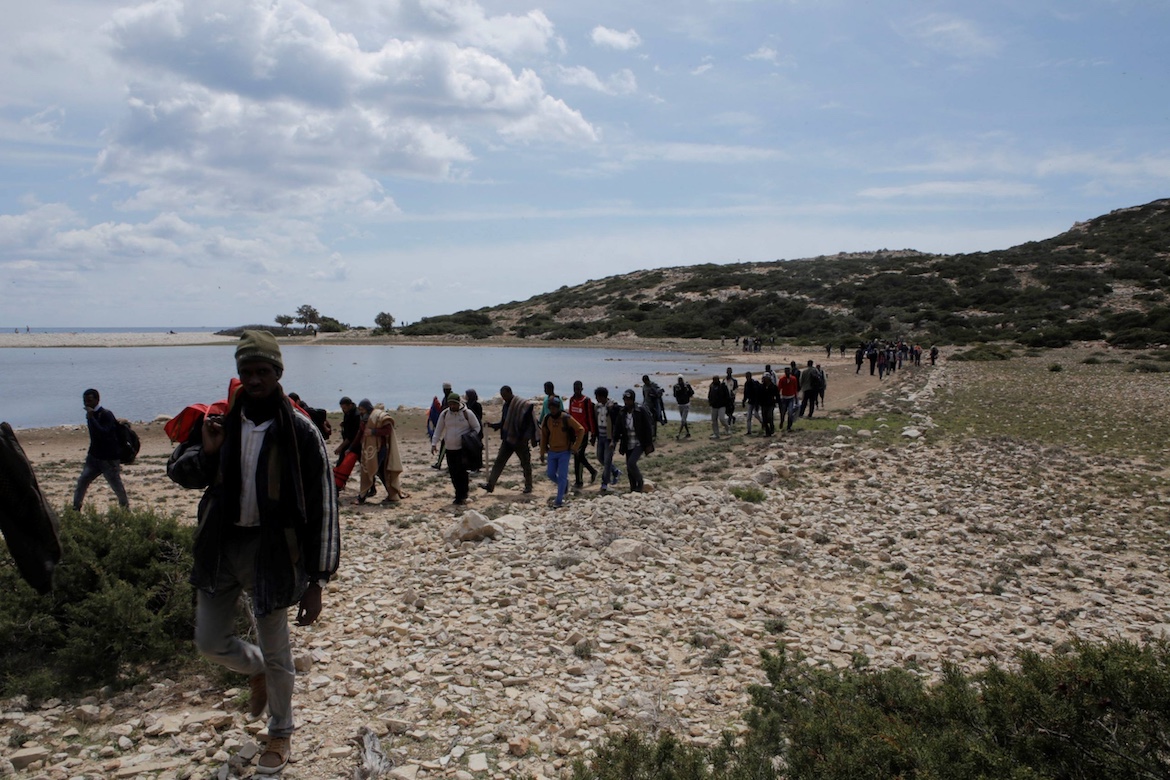
Sadly, many Greek Americans now willfully forget or are unaware that not so long ago calls for their exclusion were expressed with the same force and sincerity as contemporary cries to exclude Syrian refugees and Latin American migrants. I frequently find myself aghast reading comments on The Pappas Post.
Some “real American” characterizations of Greek immigrants were unabashedly xenophobic, like one newspaper labeling Greeks “a vicious element unfit for citizenship” and “the scum of Europe.” More insidiously, most veiled prejudice in pseudoscientific concepts of racial superiority. Sociologist Henry Pratt Fairchild highlighted the apparently low intelligence of Greeks, remarking that “while [they] are superior to the South Italians, they are decidedly inferior to the northern races, and to the Hebrew.” Furthermore, the “extreme loyalty of the modern Greek to the formal worship of the [Greek Orthodox Church],” served to impede Greek assimilation into American society.
In 1911, the Dillingham Commission, tasked by Congress with examining immigration trends, diagnosed the corrosive effects southern and eastern European immigration:
“[U]nlike the British, German, and other peoples who came during the period prior to 1880,” recent immigrants, “as a class [are] far less intelligent.” While the former came to “be part of the country,” and thus “thoroughly merged into the population,” the latter “are actuated in coming by different ideals, for …[they come] with the intention of profiting, in a pecuniary way, by the superior advantages of the new world and then returning to the old country.”
The same siren song proclaiming outsiders pose an existential threat to the U.S. has accompanied every group seeking to immigrate to America. From the Irish to the Jews to the Greeks, their exclusion was demanded by “real Americans” as necessary in preventing disturbance. Nevertheless, no sane individual today takes a revisionist line in questioning the virtue of extending membership to those groups.
One need not subscribe to any particular theory of global distributive justice to recognize that instability brought on by any combination of war, famine and/or economic depression have and will remain the primary causes of mass migration. More often than not, bigotry, rather than any coherent financial or national security need, precipitates restrictive shifts in American immigration policy. Accordingly, the same illiterate Greek laborer, hastily processed through Elis Island one day, is deemed an illegal the following day. Tainted by the mark of illegality, he is related to an inhumane quality of life.
So please, before angrily screaming “MALAKA,” take a moment and ask yourself if the motives of that El Salvadorian mother and child fleeing drug violence are indeed dissimilar from that of your ancestors fleeing the Turks. Alternatively, is that Syrian orphan really less capable of assimilating than your grandmother, who spent 60 years in America, speaking only broken English? And finally, ask yourself whether for one second the arbitrary mark of illegality would have stopped your grandfather from doing everything possible to ensure that he was able to protect and provide for his family.
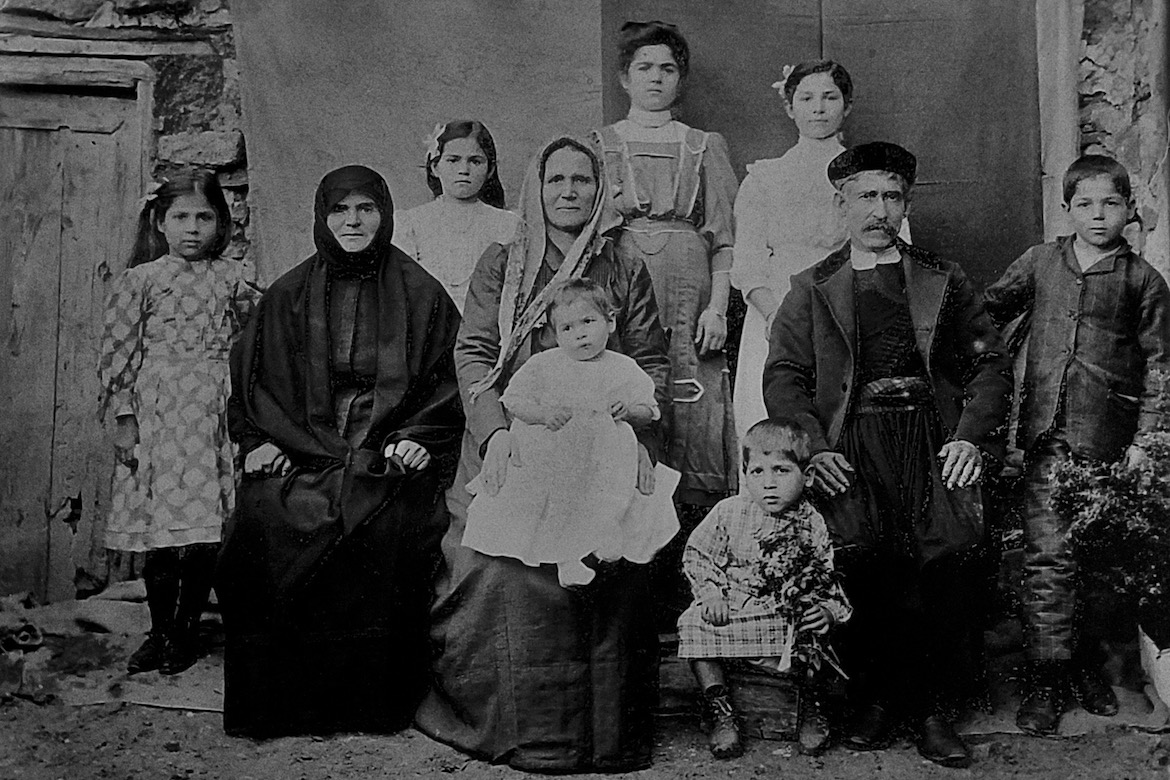
Note: The featured image is a photograph of the Kambanis family taken circa 1910 while they were still in Asia Minor.