
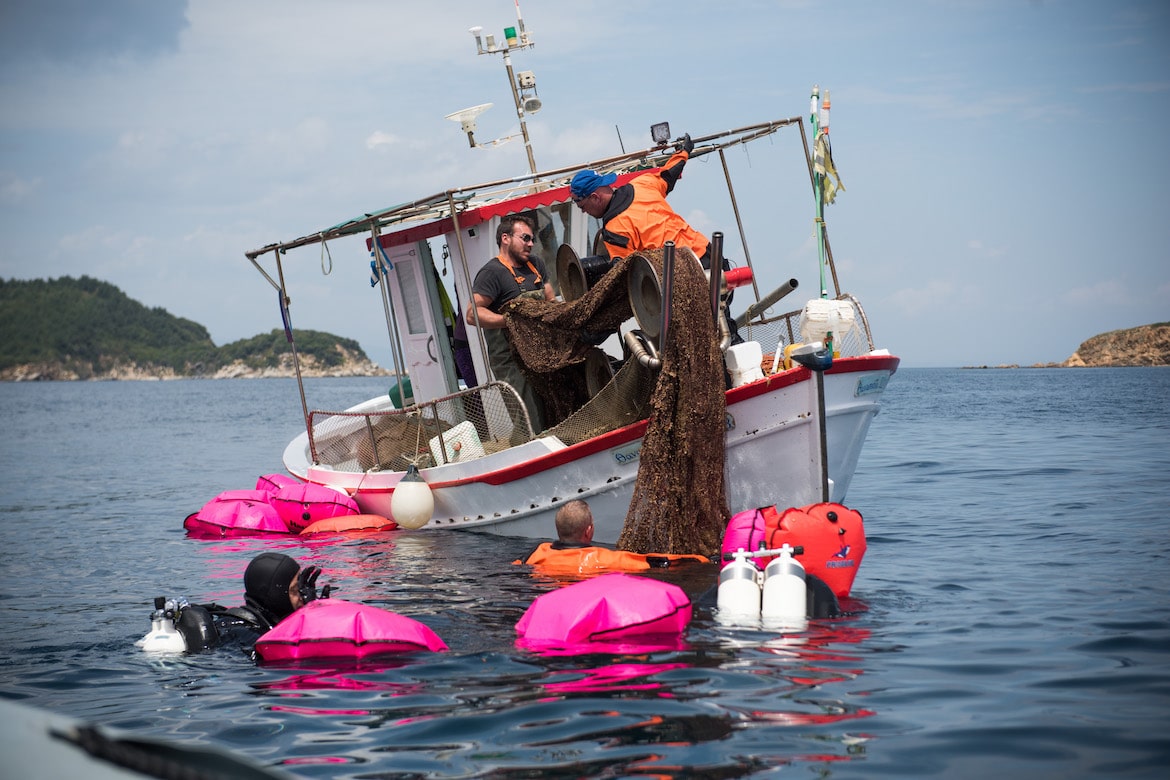
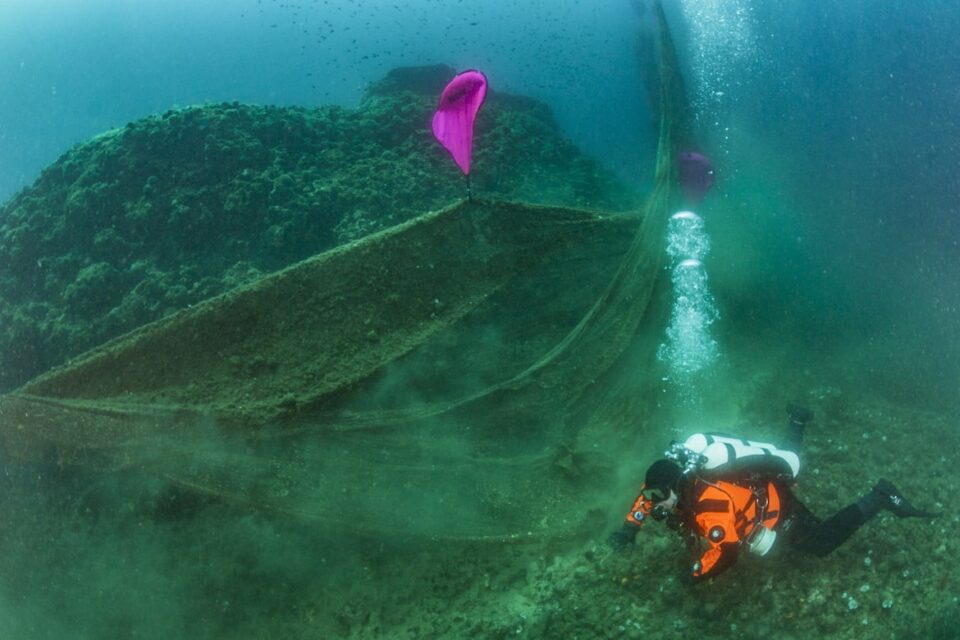
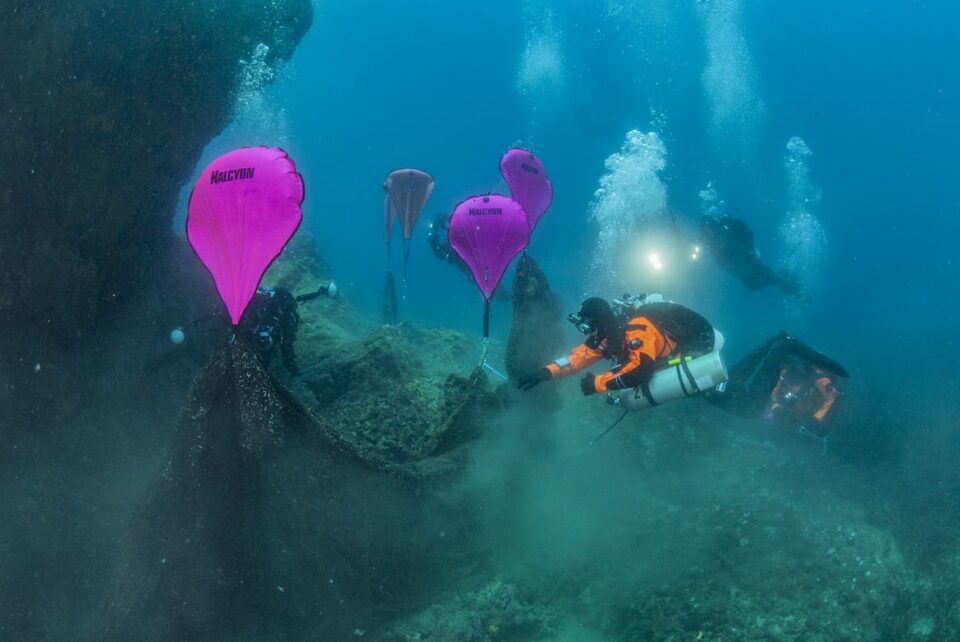
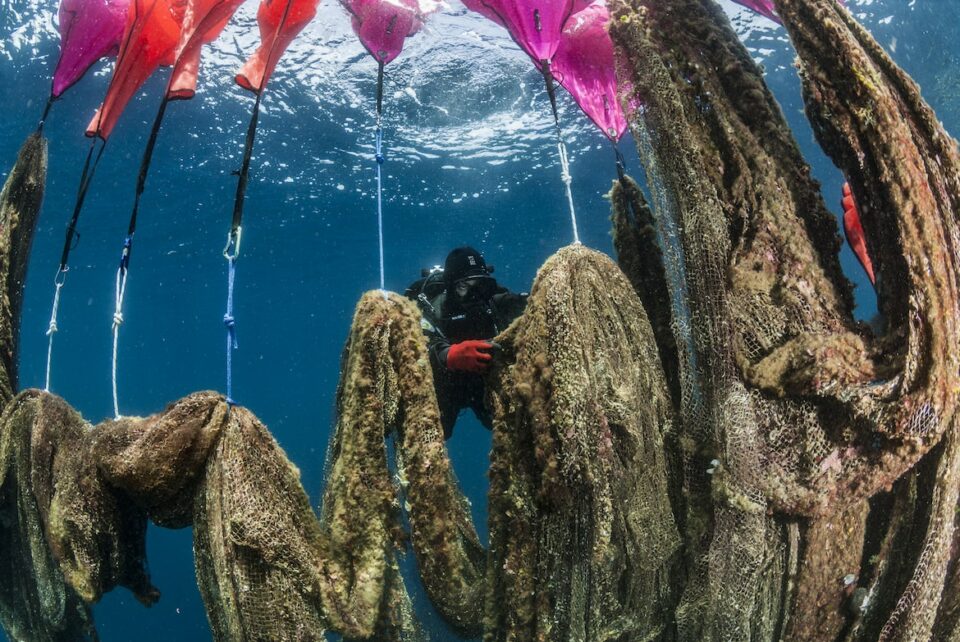
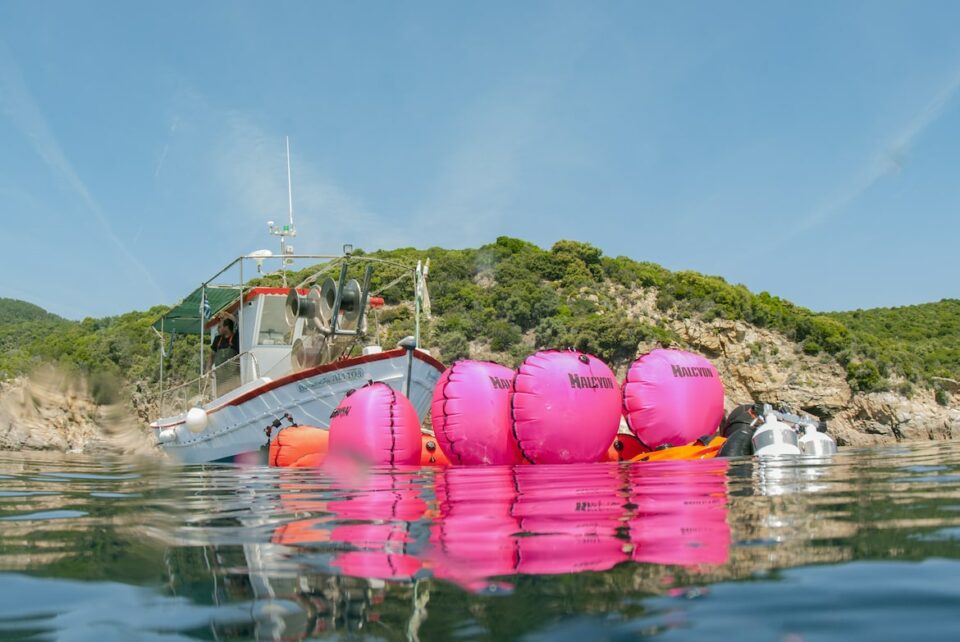
Greek and Dutch divers lifted two tons of non-degradable plastic fishing nets from a seabed outside of Stratoni, a small fishing town in northern Greece.
The nets were causing irreparable damage to local marine life, including an endangered species of Mediterranean seahorse.
Elina Samara, a marine biologist who joined the dives, said that removing the nets will greatly help the area’s “impressive” list of marine species.
“The removal of the nets will allow the marine life to recolonize its lost habitat and will not pose any future entangling threats to the marine species inhabiting the area,” Samara added.
According to the Europe-based organization Healthy Seas, the fishing nets that were removed will be recycled into yarn to create products such as socks, swimwear and carpets.
With more than 100 volunteer divers, Healthy Seas operates in the North Sea, the Adriatic and Mediterranean Sea. The organization’s staff has removed 453 tons of discarded nets from underwater since 2013.
The non-degradable nets are known as “ghost nets,” as they are extremely difficult to distinguish from natural seabed. If left untouched, they can remain underwater for hundreds of years and entangle countless marine species.
Greece’s waters are home to numerous rare endangered species such as sea turtles, seals and dolphins.
According to Health Seas, approximately 640,000 tons of fishing gear are left in the sea worldwide on an annual basis.
Featured image / Cor Kuyvenhoven, Ghost Fishing Nederlands
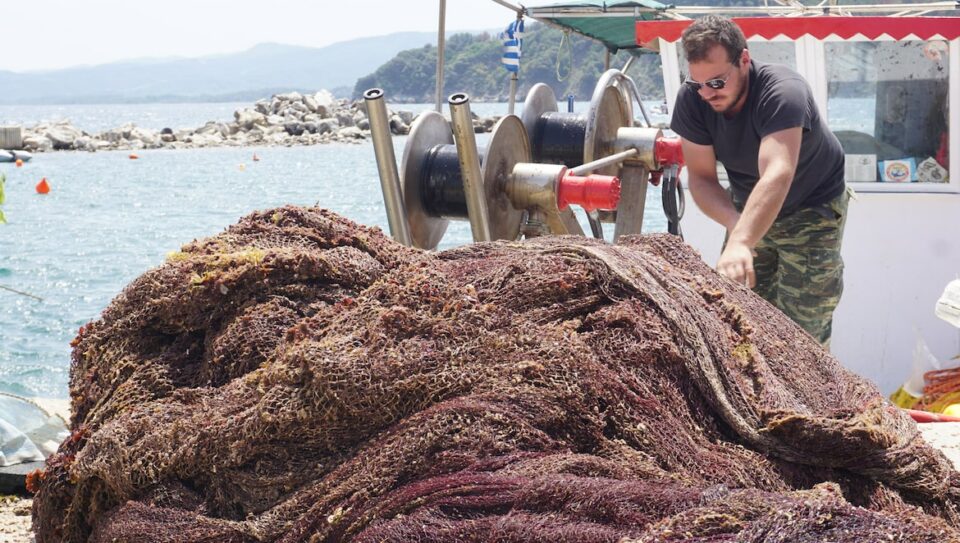
Photos / Areti Kominou, Ghost Fishing Greece