

As we celebrate Labor Day today across the United States, we should take a moment and remember the legacy of a Greek immigrant from Crete named Louis Tikas whose heroism and activism a century ago set the stage for the reforms to American labor laws and workers’ rights. Not much has been written about the story, with the exception of an important book called Buried Unsung.
Tikas was born in Crete and emigrated to the U.S. with thousands of his fellow islanders and countrymen. Official and unofficial documents point to an astonishing 40,000 Greeks working in Rocky Mountain mines, mills and railroads before World War I.
Tikas, whose full name was Elias Spantidakis, was shot and killed by U.S. government militiamen on April 20, 1914 along with more than a dozen others including women and children. The event is known as the Ludlow Massacre and involved a colony of workers — mainly immigrants from Greece, Italy and elsewhere — who were in the middle of a 14-month strike at a coal mine operated by Colorado Fuel & Iron Company owned by mogul John D. Rockefeller.
The conditions for the workers were atrocious and the immigrants, most of whom spoke no English, were taken advantage of by their American corporate bosses on a regular basis. Tikas organized a strike to demonstrate against the horrid conditions. More than 1,000 people — mostly Greek workers and their families — were immediately evicted from company housing near the mines.
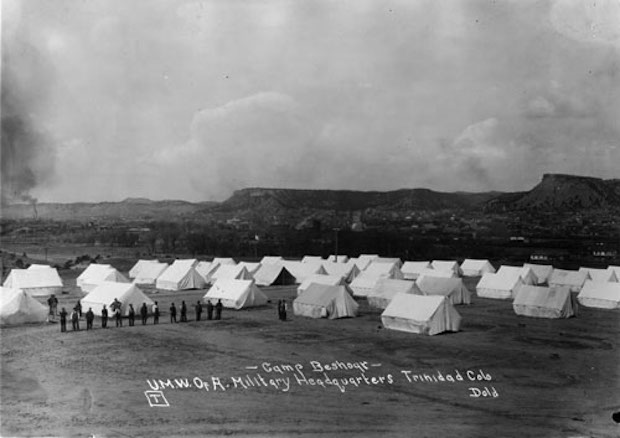
They set up a make-shift camp just outside the gates of the company. Within weeks, a tent city had been created as other workers joined the strikers in protest against the Rockefeller company. As the striking miners and their families celebrated Greek Orthodox Easter Sunday, Colorado’s governor sent in the state militia at the request of the company.
Machine gun fire began to rip indiscriminately through the camp from the militia, sending the camp into chaos. The miners fought back but were eventually overpowered.
Tikas, who throughout the day was seen helping women, children and the wounded, escaped the carnage and was captured by the militia. He was found shot in the back three times and his body remained unburied for several days. The battle ended only with the arrival of federal troops and a complete burning of the camp.
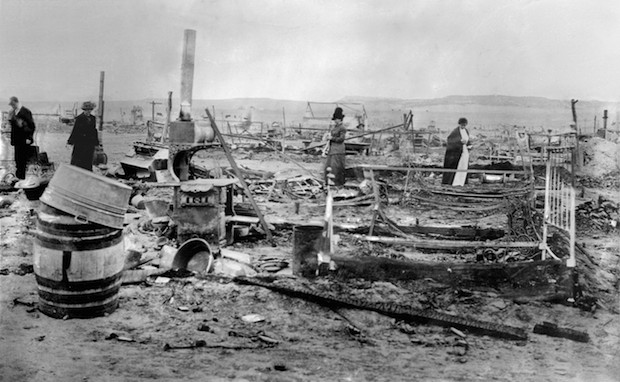
The scorn of the nation was heaped on Rockefeller and his son John D. Rockefeller Jr. was forced to accept reforms and better conditions for workers.
A U.S. Commission on Industrial Relations conducted hearings in Washington and the subsequent 1,200-page report suggested many reforms sought by the unions, including the establishment of a national eight-hour work day and a ban on child labor.
Historian Howard Zinn called Tikas’ murder by members of the Colorado militia “culminating act of perhaps the most violent struggle between corporate power and laboring men in American history.”
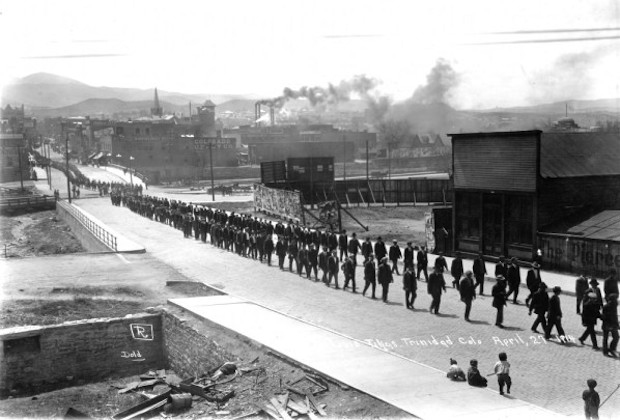
Tikas was laid to rest on April 27, 1914, in a funeral attended by hundreds of his fellow miners in a procession that was said to be more than a mile long.
California historian Zeese Papanikolas’s critically-acclaimed book Buried Unsung: Louis Tikas and the Ludlow Massacre tells the history of the massacre with a focus on Tikas’ story.
To mark the centennial of the event in 2014, Greek filmmakers Lamprini Thoma and Nickos Ventouras released a documentary titled “Palikari” which charts the story of the strike and Tikas’s murder as it survives in oral and family traditions as well as in official history. The filmmakers interviewed historians and artists, some of them direct descendants of those striking miners.
“Palikari” is available to purchase on DVD exclusively from The Pappas Post Market.
Watch the film trailer below