
Today marks the anniversary of a day when a Greek immigrant community unified against discrimination.
In the late 1800s, waves of Cretans began arriving in Utah to work in numerous mines, soon growing into thousands and working in places such as Price, Bingham and Carbon County.
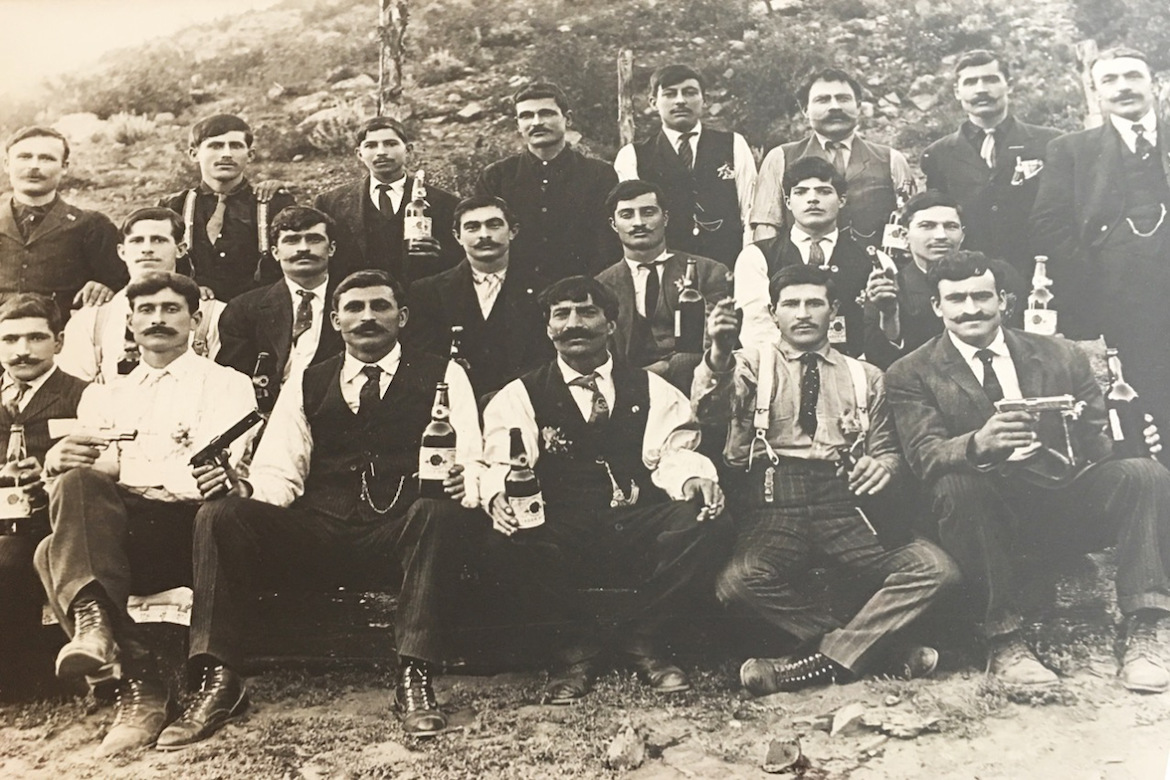
From their arrival, the Cretans (and all Greeks) were discriminated against by the established laborers in the region; they received lower wages and were often given the most dangerous jobs to perform. Known throughout the region as expert moonshine makers, the Cretans were the most rebellious of the immigrant groups and because of danger were forced to carry their own arms for self-defense.
The Cretans worked as strike-breakers, often getting involved in strikes such as a violent one which took place in 1922 in Carbon County. Moreover, they became the most militant group after one of their men was killed by a deputy sheriff.
Union activity and particularly striking was condemned as un-American, and immigrants who participated in these activities were characterized as ingrates and unfit for American citizenship; thus, the Ku Klux Klan targeted the Cretans and all Greeks in increased campaigns against them in 1922-23.
The Klan burned crosses in Salt Lake City and in the industrial towns and camps, marched down streets, sent threatening letters to businessmen, and rampaged through Greek stores in Helper, Utah forcing out the American workers and warning them not to work for Greeks.
As a formal response, the Cretans organized and in Salt Lake City, Utah on July 5, 1918 formed the Cretan Brotherhood of Minos, only to later change the name to Minos — an independent, mutual aid, philanthropic, progressive and educational organization.
Like most early Cretan associations formed throughout the nation, the goal of Minos was to give fellow Cretans financial assistance as well as to support cultural and philanthropic endeavors in their community.